Accredited Exercise Physiologists in St Kilda

Osteoporosis Exercise Program: Evidence-Based Strength Training for Bone Health
Osteoporosis affects 1.2 million Australians, with another 6.3 million living with osteopenia (low bone density). The most effective non-pharmaceutical intervention? Progressive resistance training and weight bearing exercises, prescribed by qualified exercise physiologists and based on landmark research including the LIFTMOR study and Onero program.
What Is an Osteoporosis Exercise Program?
An osteoporosis exercise program is a clinically prescribed, progressive training plan designed to increase bone mineral density, reduce fracture risk, and improve functional capacity. Unlike generic fitness routines, these programs apply specific loading principles – particularly high-intensity resistance training and impact activities – that stimulate bone remodelling through Wolff’s Law: bone adapts to the forces placed upon it.
At our St Kilda exercise physiology clinic, we design osteoporosis exercise programs based on your DEXA scan results, fracture history, current fitness level, and individual risk factors. Every program follows evidence-based protocols proven to improve bone density outcomes.
Why Exercise Matters for Bone Density
Bone is living tissue that responds to mechanical loading. When muscles pull on bone during weight bearing exercises and resistance training, osteoblasts (bone-building cells) are stimulated to lay down new bone mineral. Without adequate loading stimulus, osteoclasts (bone-resorbing cells) dominate, accelerating bone loss.
Research from Osteoporosis Australia confirms that targeted exercise can slow bone loss by 1-2% annually and, in some cases, increase bone mineral density by 2-4% at the lumbar spine and femoral neck – the two most clinically significant fracture sites.
The critical insight? Not all exercise builds bone equally. Walking alone isn’t sufficient. Swimming and cycling, while excellent for cardiovascular health, provide minimal osteogenic stimulus because they lack the impact and resistance loading that triggers bone adaptation.
The LIFTMOR Study and Onero Program: What the Research Shows
The landmark LIFTMOR study (Watson et al., 2018) conducted at Griffith University in Queensland fundamentally changed how exercise physiologists approach osteoporosis. The study demonstrated that high-intensity progressive resistance training – not low-intensity “safe” exercise – produced the greatest improvements in bone density for postmenopausal women with low bone mass.
Key findings from the LIFTMOR study:
- Participants performed deadlifts, squats, and overhead press at 80-85% of their one-repetition maximum
- Bone mineral density at the lumbar spine improved by 2.9% compared to controls
- Femoral neck bone density improved by 0.3%
- Zero fractures occurred during the 8-month high-intensity program
- Falls risk decreased alongside strength improvements
The Onero program, developed from the LIFTMOR research, is now Australia’s leading evidence-based osteoporosis exercise framework. Delivered by accredited exercise physiologists, the Onero program applies progressive high-intensity resistance training specifically targeting bone density at the spine and hip.
We incorporate Onero program principles into our St Kilda practice because the research is unequivocal: properly supervised high-intensity training is both safe and significantly more effective than low-intensity alternatives for people with osteoporosis.
Weight Bearing Exercises for Osteoporosis: What Actually Works
Weight bearing exercises for osteoporosis fall into two categories, both essential for comprehensive bone health programming:
High-Impact Weight Bearing Activities
These involve both feet leaving the ground or creating impact forces through the skeleton. Research shows bone responds best to novel, varied loading patterns rather than repetitive movements.
Effective high-impact exercises include:
- Jumping and landing progressions (starting with low heights, progressing gradually)
- Heel drops (standing on toes, dropping heels sharply to create impact)
- Stair climbing with emphasis on loading
- Skipping and hopping progressions
We progress impact activities carefully based on your current bone density, fracture risk, balance, and confidence. Someone with severe osteoporosis and falls history requires different programming than someone with mild osteopenia.
Resistance Training for Bone Density
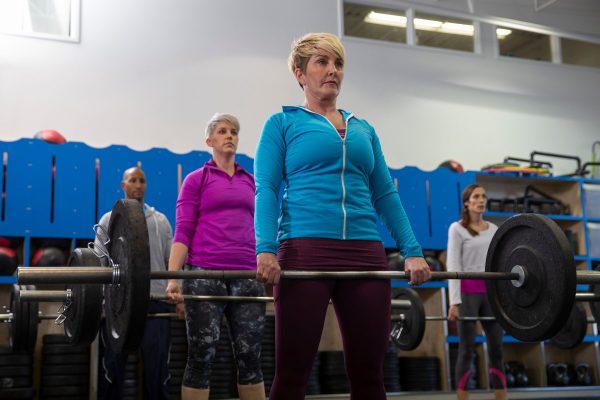
Strength training for osteoporosis is the most critical component of any osteoporosis exercise program. The LIFTMOR evidence demonstrates that high-intensity loading (80-85% 1RM) produces superior bone density outcomes compared to moderate or low-intensity training.
Key resistance exercises include:
- Deadlifts (conventional and sumo variations): Load the entire posterior chain and spine
- Back squats: Load the femoral neck, lumbar spine, and lower limbs
- Overhead press: Load the spine axially through upper body
- Bent-over rows: Load the spine and improve thoracic extension
- Lunges and step-ups: Unilateral loading for hip and femoral neck
These exercises aren’t just for young athletes. We’ve successfully progressed women in their 70s and 80s to meaningful loads using proper technique coaching and systematic progression through our health and fitness progressions framework.
Exercises to Avoid with Osteoporosis
Not every exercise is appropriate when bone density is compromised. Understanding what to avoid is as important as knowing what to do.
Exercises Requiring Caution or Modification
Spinal flexion under load: Loaded sit-ups, crunches, and heavy forward bending exercises place significant compressive force on vertebral bodies. For individuals with vertebral osteoporosis, this increases fracture risk. We substitute anti-extension and anti-rotation core exercises (planks, Pallof presses, dead bugs) that strengthen the trunk without flexion loading.
High-impact activities without progression: Jumping straight into box jumps or running without systematic progression can exceed bone tolerance. Impact must be introduced gradually with appropriate monitoring.
Excessive twisting under load: Heavy rotational movements can stress vertebral structures. We include rotation in programs but with appropriate loading and technique control.
Yoga and Pilates positions requiring deep spinal flexion: Some traditional poses (full forward folds, rolling like a ball in Pilates) involve spinal flexion that may be inappropriate. Modified versions can be safe and beneficial when prescribed by practitioners who understand bone health.
How We Design Osteoporosis Exercise Programs at Our St Kilda Clinic
Our approach follows a structured assessment-to-intervention pathway:
Step 1: Comprehensive Assessment
We review your DEXA scan results (T-scores at lumbar spine, femoral neck, total hip), fracture history and fracture risk assessment (FRAX score), current medications including bisphosphonates or denosumab, falls history and balance assessment, current physical activity levels and exercise history, and any other health conditions requiring consideration.
This functional assessment establishes your baseline and informs every programming decision.
Step 2: Individualised Program Design
Based on assessment findings, we design your program targeting specific bone sites identified as low density on DEXA. Programs typically include 2-3 supervised sessions weekly during the initial 12-week phase, combining resistance training at progressive intensities (building toward 80-85% 1RM), impact activities appropriate to your risk level, balance and falls prevention exercises, and postural correction work particularly for thoracic kyphosis.
Step 3: Progressive Overload and Monitoring
Bones require progressive overload to continue adapting – the same principle driving all strength and conditioning programs. We systematically increase loads, vary exercises, and adjust impact intensity based on your response.
We recommend repeat DEXA scanning at 18-24 month intervals to objectively track bone density changes alongside strength and functional improvements measured more frequently.
Who Benefits from an Osteoporosis Exercise Program?
Diagnosed Osteoporosis (T-score ≤ -2.5)
If you’ve been diagnosed with osteoporosis following DEXA scanning, an evidence-based exercise program should be considered essential alongside any pharmaceutical intervention your doctor prescribes. Exercise and medication work synergistically – neither is optimally effective alone.
Osteopenia (T-score between -1.0 and -2.5)
Early intervention during the osteopenia phase offers the greatest opportunity to prevent progression to osteoporosis. Strength training for bone density at this stage can potentially reverse bone loss before it becomes clinically significant.
Post-Menopausal Women
Oestrogen decline during menopause accelerates bone loss significantly. Women can lose up to 20% of bone density in the 5-7 years following menopause. Starting an osteoporosis exercise program during or immediately after menopause provides critical protection.
Family History of Osteoporosis
If a parent or sibling has experienced osteoporotic fractures, your risk is elevated. Preventive exercise programming can substantially reduce this inherited risk.
Individuals on Corticosteroids
Long-term corticosteroid use accelerates bone loss. Exercise programming helps offset medication-related bone density reduction.
Funding and Access Options
Osteoporosis exercise programs through our St Kilda clinic can be accessed via several funding pathways:
Medicare: GP referral under a Chronic Disease Management plan provides up to 5 partially-rebated exercise physiology sessions annually. Check our fees page for current rebate amounts.
DVA: Veterans with Gold or White Cards can access DVA exercise physiology for osteoporosis management.
NDIS: Participants with relevant conditions can access NDIS exercise physiology services.
Private Health Insurance: Coverage varies by fund and policy level. Many extras policies include exercise physiology rebates.
Private Payment: Direct booking without referral is always available.
Frequently Asked Questions
Is heavy lifting safe with osteoporosis?
Yes, when properly supervised and progressively introduced. The LIFTMOR study demonstrated zero fractures during high-intensity resistance training in postmenopausal women with low bone mass. The key is qualified supervision, proper technique, and systematic progression – not avoiding load entirely.
How long before I see bone density improvements?
Bone remodelling cycles take approximately 4-6 months. Measurable DEXA improvements typically require 12-24 months of consistent training. However, strength, balance, and functional improvements occur much sooner (4-8 weeks), reducing falls risk immediately.
Can exercise reverse osteoporosis?
Exercise can improve bone mineral density by 2-4% at key sites based on LIFTMOR data, which may shift T-scores meaningfully. Whether this constitutes “reversal” depends on severity. Combined with appropriate medication and nutrition (calcium, vitamin D), exercise provides the best non-pharmaceutical outcome.
What about walking – isn’t that weight bearing?
Walking is a weight bearing activity but provides minimal osteogenic stimulus because bone adapts to habitual loads. Your skeleton is already adapted to walking forces. Bone requires novel, higher-intensity loading above normal thresholds to trigger new formation. Walking remains excellent for cardiovascular health and general wellbeing but shouldn’t be your primary bone-building strategy.
How often should I train for bone health?
Research supports 2-3 sessions weekly for optimal bone density outcomes. Sessions don’t need to be lengthy – 45-60 minutes of targeted resistance training and impact work is sufficient when intensity is appropriate.
Your Next Step: Book Your Bone Health Assessment
If you’ve been diagnosed with osteoporosis or osteopenia, have risk factors for low bone density, or want to proactively protect your bone health, an evidence-based osteoporosis exercise program could be the most important investment you make in your long-term health.
Book Your Osteoporosis Exercise Assessment Today – Our St Kilda clinic provides comprehensive bone health assessments and evidence-based programs grounded in LIFTMOR and Onero program research.
Contact us with your most recent DEXA results and we’ll discuss how targeted exercise programming can help protect and strengthen your bones.
Looking for an exercise physiologist near me who specialises in osteoporosis exercise programs? Our Melbourne team designs evidence-based bone density programs combining high-intensity resistance training, impact activities, and falls prevention for lasting results.

About the Author
Evan is the founder and director of Walking Tall Rehab, an accredited exercise physiologist in St Kilda, Melbourne. He specialises in injury rehabilitation, NDIS programs, and helping people of all ages build strength, confidence, and independence through evidence-based exercise.